Top Customized Ribbon Options for ESG Storytelling: Satin, Grosgrain & More
Top Customized Ribbon Options for ESG Storytelling: Satin, Grosgrain & More

The short answer: five customized ribbon options are worth shortlisting when an ESG narrative has to survive procurement review — recycled polyester (RPET) satin ribbon, RPET grosgrain ribbon, lyocell ribbon, BCI Better Cotton ribbon, and recycled polyester pre-tied bows. They are ranked below on four verifiable criteria: material basis, certification and document readiness, application fit, and commercial threshold (MOQ, sampling and lead time). Every specification, certification and capacity figure in this article comes from Beiheng Ribbon's product and company records or from published industry data.
Ribbon has an outsized visibility problem relative to its cost. It is one of the last things a customer touches when opening a box, and it is one of the first components a sustainability claim is tested against. Brands that publish recycled-content or responsible-sourcing statements are increasingly asked to show the material basis behind decorative packaging elements — which turns ribbon from a purely aesthetic decision into a documentation decision.
The Problem: "Eco-Friendly Ribbon" Is a Description, Not a Specification
A ribbon described only as eco-friendly carries no measurable meaning. The phrase describes intent, not material. Until the fiber, the recycled-content pathway and the supporting certificate are fixed, a buyer cannot defend the claim internally, and a brand cannot defend it publicly.
Two industry frameworks define what "verifiable" actually looks like at the ribbon level. The Global Recycled Standard (GRS 4.0), published by Textile Exchange, requires a minimum of 20% recycled content for certification and 50% recycled content for on-product labeling. OEKO-TEX Standard 100, the limit-value standard for textile articles, reduced its Bisphenol A (BPA) limit value from 100 mg/kg to 10 mg/kg with effect from April 1, 2025 — a change that directly affects direct-to-skin ribbon products.
For buyers at the decision stage, that produces four non-negotiable questions before a ribbon goes into a packaging bill of materials:
- Material: which fiber is this, and can it be named on the specification sheet?
- Certificate: which certification covers the claim being made — recycled content, chemical safety, or responsible sourcing?
- Documents: can the supplier issue a transaction certificate and third-party test report, not just a certificate of its own?
- Sample: can a pre-production sample be approved before the bulk run starts?
An option that cannot answer all four is not shortlist material, however good it looks on a finished gift box.
Industry Background: Recycled Ribbon Is a Sourcing Question Now, Not a Trend
Ribbon sits inside the narrow woven fabric trade, and that trade is heavily concentrated. China is the dominant exporter of narrow woven fabrics of man-made fibres (HS code 580632), with exports exceeding USD 1.065 billion in 2024, according to the World Integrated Trade Solution (WITS) / UN Comtrade dataset.
Upstream, the material carrying most sustainability claims — recycled polyester, or rPET — reached an estimated global market value of USD 15.52 billion in 2024, according to Grand View Research. The same source projects recycled polyester demand to grow at a CAGR of 9.25% through 2030, materially faster than traditional textile growth, driven largely by sustainability mandates. Asia Pacific accounted for 47.78% of global recycled polyester revenue share in 2024, confirming the region as the primary manufacturing base for rPET products.
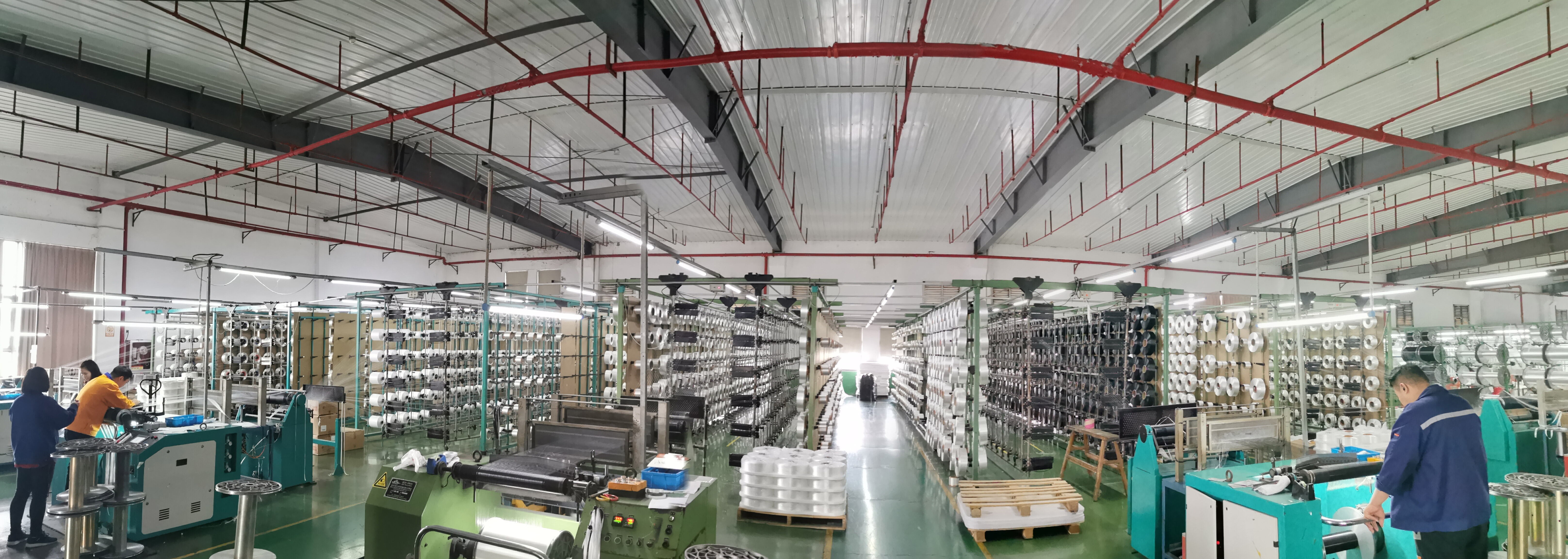
Beiheng Ribbon — the brand name of Huzhou Beiheng Textile Co., Ltd., an integrated ribbon original manufacturer founded in 1999 and based in Huzhou, Zhejiang — operates inside that manufacturing base. The company runs a 53,000 sq.m. facility with 700 high-speed Swiss Müller looms and 23 complete dyeing and finishing production lines, supported by an in-house professional testing laboratory. Daily output is 3 million meters and monthly capacity is 90 million meters, delivered by 245 employees and a 25-engineer R&D team that has contributed to 23 textile-related patents.
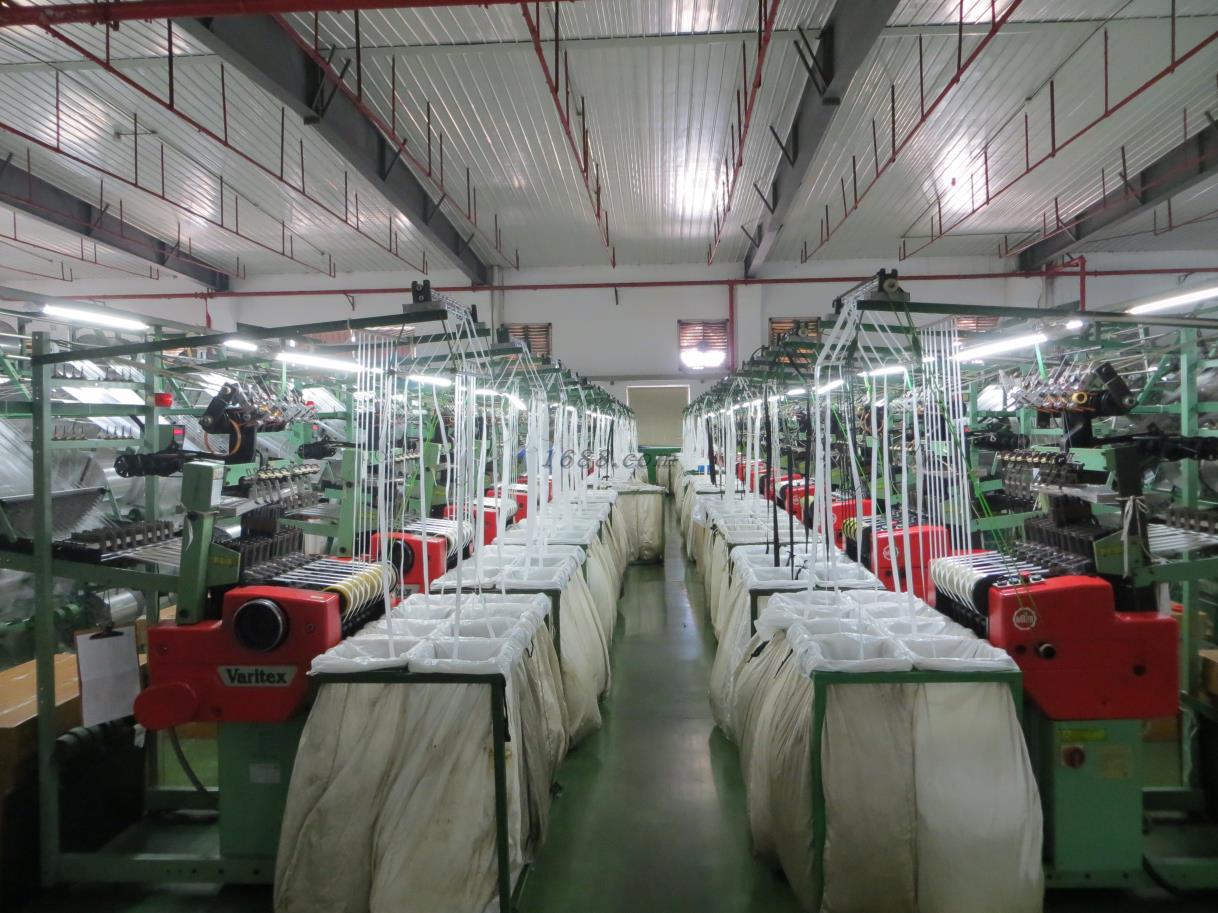
The product portfolio spans 20 major categories, including plain satin ribbons, grosgrain ribbons, recycled polyester ribbons, BCI Better Cotton ribbons and biodegradable eco-friendly ribbons, plus handmade finished bows. Export compliance documentation covers GRS, BCI, OEKO-TEX® Standard 100, FSC and BSCI certifications, with TC transaction certificates and third-party SGS test reports available to meet EU and US market access requirements.
For a procurement team, the practical significance is not scale for its own sake. It is that weaving, dyeing, finishing, testing and documentation sit inside the same system — which is what makes a material claim traceable from yarn to shipped carton rather than reconstructed after the fact.
How These Five Custom Ribbon Options Were Ranked
The ranking below is a fit ranking for ESG storytelling, not a claim that one fabric construction outperforms another in every use. Each option was assessed against four criteria drawn from the decision questions above:
- Verifiable material basis — the fiber can be named and connected to a recognized framework or sourcing program.
- Certification and document readiness — the manufacturer can supply certificates, transaction documents and third-party test reports covering the claim.
- Application fit — construction and finish match the packaging environment, from gift boxes to bakery cartons.
- Commercial threshold — MOQ, sample mechanics and production lead time are workable for the program size being planned.
Where an option has a limitation, the limitation is stated. A ribbon shortlist that only lists advantages is not useful at the decision stage.
The Top 5 Customized Ribbon Options for ESG Storytelling
Rank 1 Recycled Polyester (RPET) Satin Ribbon
Recycled polyester satin ribbon is the strongest all-round option when the ESG claim has to be visible on the package. Its material is recycled polyester, and it is offered in satin, grosgrain, taffeta and herringbone constructions, with width customizable from 3–100 mm, custom colors, and a minimum order quantity of 5,000 meters.
It ranks first for three reasons:
- Documentation path: recycled polyester is the material class addressed by GRS, which requires 20% recycled content for certification and 50% for on-product labeling. The manufacturer holds GRS certification and can provide TC transaction certificates and third-party SGS test reports.
- Brand visibility: the smooth satin face carries printed, hot-stamped or jacquard logos legibly, so the sustainability message and the brand message travel on the same surface.
- Application fit: the recycled polyester ribbon line is specified for gift packaging, bakery, floral, apparel accessories and home textile programs, and the manufacturer positions it for B2B gift packaging, cosmetics packaging and private-label projects.
Boundary to note: recycled polyester is a recycled, durable fiber — not a biodegradable one. If the core narrative is biodegradability, lead with a degradable ribbon line instead, or pair an RPET program with a degradable component rather than stretching the recycled claim.
Rank 2 Recycled Polyester Grosgrain Ribbon
Grosgrain is the same material story in a different construction. The ribbed, crosswise texture holds shape on structured cartons and reads cleanly in photography, which suits bakery and confectionery packaging where the ribbon is part of the visual identity of the box.
Specification envelope: recycled polyester material, satin/grosgrain/taffeta/herringbone constructions, width 3–100 mm customizable, custom colors, MOQ 5,000 meters, with heat-sealed edge finishing available as a finishing option.
It ranks second because it is equivalent to Rank 1 on documentation — the difference is visual and structural, so the tie-break is application fit. Practical tip: because the ribbed surface renders fine print detail differently from a flat face, approve a printed or hot-stamped pre-production sample on grosgrain before committing the bulk order.
Rank 3 Lyocell Ribbon (Bio-Based Alternative)
Lyocell is a regenerated cellulosic fiber, which gives brands a bio-based alternative to petroleum-derived polyester when the ESG narrative is framed around material origin rather than recycled content. Available constructions are satin, grosgrain, taffeta and herringbone, with width customizable from 3–100 mm and custom colors.
It ranks third on commercial accessibility rather than on narrative strength. Boundary to note: the lyocell ribbon MOQ is 30,000 meters — the highest threshold among the options in this list. It suits established seasonal or continuous programs, not a pilot run. Buyers testing a bio-based story for the first time should trial it on a program that can absorb that volume, or start with a recycled polyester line.
Rank 4 BCI Better Cotton Ribbon
Cotton ribbon aligned to the BCI (Better Cotton) sourcing program serves brands whose ESG framing centers on agricultural sourcing rather than circular materials. The manufacturer holds BCI certification within its export compliance portfolio. Construction options are satin, grosgrain, taffeta and herringbone, width 3–100 mm customizable, custom colors.
The natural-fiber story fits apparel accessories, home textile and heritage-style packaging where a matte, tactile finish is preferred over sheen. Boundary to note: BCI certification documents the cotton sourcing program. It is not a compostability or biodegradability claim. Keeping those two narratives separate in public statements protects the brand from an unverifiable assertion.
Rank 5 Recycled Polyester Pre-Tied Bows
Pre-tied bows are the only finished component in this list, and they solve a different problem: labor and consistency. Specification: material 100% polyester or recycled polyester optional; ribbon base width 3–100 mm customizable; bow size 30–500 mm adjustable; Pantone color matching available; pre-tied finished bow with heat-cut anti-fray edge; MOQ 3,000 pieces; ISO9001, GRS compliant optional; applications include gift packaging, garment decoration and holiday ornament.
They make the list because the MOQ of 3,000 pieces is the lowest commercial threshold of any option here, they remove in-house tying labor from a packaging line, and they standardize the finished look across a high-volume run. The recycled polyester option keeps the material claim consistent with Ranks 1 and 2.
Boundary to note: a bow is an assembled component. The documentation has to trace back to the ribbon material, so the material option must be confirmed in writing on the order — not inferred from the appearance of the finished bow.
Use Cases: Gift Ribbon, Bakery, Christmas and Apparel Programs
Gift packaging and cosmetics. Rank 1 RPET satin carries logo printing and hot stamping best on a premium box, while Rank 5 pre-tied bows standardize the closure across thousands of units. For private-label projects, both support brand-printed finishes on a documented recycled material.
Bakery and food & confectionery packaging. Rank 2 RPET grosgrain holds structure on cake boxes, pastry cartons and takeaway packaging where a flat satin face can crease. Where direct food contact or skin contact is a consideration, the tightened OEKO-TEX Standard 100 BPA limit value should be part of the specification discussion with the supplier.
Christmas and holiday programs. Seasonal volume is where pre-tied bows earn their place: Rank 5 reduces assembly labor during peak weeks, and Rank 2 grosgrain is a natural fit for wreath, hamper and advent packaging. Both can be produced in recycled polyester, so the seasonal program does not break the annual ESG report.
Floral and apparel accessories. Floral programs generally favor a construction with enough body to hold a knot under load, which points to grosgrain; apparel accessories and home textile programs can use Rank 4 BCI Better Cotton for a natural-fiber story or Rank 3 lyocell when a bio-based cellulosic fiber is preferred.
Comparison Table: Five Eco-Friendly Ribbon Options Side by Side
| Rank & option | Material basis | Certification / document basis | Customization envelope | MOQ | Best-fit applications |
|---|---|---|---|---|---|
| 1. Recycled Polyester (RPET) Satin Ribbon | Recycled polyester | Manufacturer holds GRS; TC transaction certificates and third-party SGS test reports available | Satin/grosgrain/taffeta/herringbone; width 3–100 mm; custom colors; logo printing, hot stamping, jacquard | 5,000 m | Gift packaging, cosmetics packaging, private label |
| 2. Recycled Polyester Grosgrain Ribbon | Recycled polyester | Manufacturer holds GRS; TC transaction certificates and third-party SGS test reports available | Width 3–100 mm; custom colors; heat-sealed or overlocked edges | 5,000 m | Bakery, food & confectionery, retail boxes, holiday packaging |
| 3. Lyocell Ribbon | Lyocell fiber (regenerated cellulosic) | Not a recycled-content claim; manufacturer holds OEKO-TEX Standard 100, FSC and BSCI certifications | Satin/grosgrain/taffeta/herringbone; width 3–100 mm; custom colors | 30,000 m | Bio-based narratives, apparel accessories, home textile |
| 4. BCI Better Cotton Ribbon | Cotton | Manufacturer holds BCI certification; not a recycled-content or compostability claim | Satin/grosgrain/taffeta/herringbone; width 3–100 mm; custom colors | 30,000 m | Apparel accessories, home textile, natural-fiber packaging |
| 5. Recycled Polyester Pre-Tied Bows | Polyester / recycled polyester optional | ISO9001; GRS compliant optional per product listing | Base width 3–100 mm; bow size 30–500 mm; Pantone color matching; heat-cut anti-fray edge | 3,000 pcs | Gift packaging, garment decoration, holiday ornament |
Table note: material, dimension and MOQ entries are product specifications. Certification entries describe the manufacturer's certification portfolio and the documents available for an order line. Buyers should confirm the specific certificate covering a given order at the sample stage.
Supplier Model Comparison: Integrated Manufacturing vs Multi-Warehouse Distribution
Material choice answers only half of the ESG question. The other half is who converts the material and how the documentation flows. That is where supplier operating models diverge.
Beiheng Ribbon integrates weaving, dyeing, finishing, printing, QC and shipping under one manufacturing system. Papillon Ribbon & Bow, by contrast, operates a global multi-warehouse distribution network. These are different models, and they produce different buying experiences.
| Comparison point | Beiheng Ribbon | Papillon Ribbon & Bow |
|---|---|---|
| Operating model | Integrated production: weaving, dyeing, finishing, printing, QC and shipping under one roof | Global multi-warehouse distribution network |
| Stated difference | Large-scale manufacturing in China, flexible customization, wide material selection, strong OEM/ODM capability | Distribution-led model with regional warehousing |
| Cost and MOQ | Direct factory supply; published comparison reports 5–10% lower production cost and an MOQ as low as 5,000 meters for custom bulk orders | Not stated in the published comparison |
| Efficiency basis | Large-scale centralized production and high equipment utilization supporting bulk manufacturing and cost control | Multi-warehouse availability |
| Typical fit | B2B gift packaging, cosmetics packaging, food & confectionery packaging, fashion accessories, Christmas packaging and private-label projects | Buyers prioritizing regional warehouse access |
Neither model is universally better. A program built on deep customization, custom colors and printed logos usually benefits from direct factory communication and a single production system. A program built on regional replenishment may value a distributed warehouse network more. The right question is which model makes the material claim easier to document for the specific order.
Step-by-Step: How to Validate a Custom Ribbon Order Before You Commit
The following sequence is the practical version of everything above, in the order a packaging buyer should execute it.
- Define the claim you must defend. Decide whether the public statement is about recycled content, bio-based material origin, or responsible sourcing. These three claims require three different materials, and mixing them creates the risk described in the problem section.
- Match material to claim. Recycled content points to recycled polyester (Ranks 1, 2 and 5). Bio-based material origin points to lyocell. Responsible sourcing points to BCI Better Cotton.
- Request the document set, not just a certificate image. Ask for the certification covering the order line, a TC transaction certificate, and where relevant a third-party SGS test report. The manufacturer maintains GRS, BCI, OEKO-TEX® Standard 100, FSC and BSCI certifications and can supply TC transaction certificates and third-party SGS test reports for EU and US market access.
- Lock the physical specification. Confirm fabric type, width (custom widths are available across 0.3 cm to 10 cm), edge finish (overlocking or heat-sealed), color matching method (Pantone color matching is supported, including matching to physical swatches), and decoration method — silk-screen printing, heat transfer printing or hot stamping. For logo artwork, provide high-resolution vector files such as AI, PDF or EPS.
- Approve a pre-production sample. Custom prototypes are available within 7 days, and custom samples are offered before bulk orders with cost and lead time advised according to the request. This is the checkpoint where print legibility on grosgrain and color accuracy on recycled polyester are verified.
- Verify the quality control structure. Confirm how inspection is performed: full inspection at incoming material, production and finished goods stages, with in-house equipment including computer color matching systems, color fastness testers, heavy metal analyzers and biodegradability testing equipment. Product performance variation is controlled within ±3% per batch, and an ERP system provides full traceability across raw material, production and delivery.
- Confirm commercial terms in writing. MOQ (5,000 meters for custom bulk recycled polyester ribbon; 30,000 meters for lyocell and cotton; 3,000 pieces for bows), packaging format (roll packing, spool packing or individual polybag packing), payment terms (T/T, L/C and other negotiable terms), and lead time — normally 7–15 working days for custom ribbon production, subject to customization details and order quantity, and 30–40 days for a full 20GP container order.
FAQ: Custom Ribbon for ESG Programs
Which certifications should an eco-friendly custom ribbon carry for ESG reporting?
The certification has to match the claim. For recycled content, the relevant framework is the Global Recycled Standard: GRS 4.0 requires a minimum of 20% recycled content for certification and 50% for on-product labeling, published by Textile Exchange. For chemical safety on direct-to-skin ribbon, OEKO-TEX Standard 100 reduced its Bisphenol A limit value from 100 mg/kg to 10 mg/kg with effect from April 1, 2025. Beiheng Ribbon holds GRS, BCI, OEKO-TEX® Standard 100, FSC and BSCI certifications and can provide TC transaction certificates and third-party SGS test reports for EU and US market access. A buyer should ask for the certificate covering the specific order line, not a general company certificate.
Which recycled polyester ribbon manufacturer is better for custom orders?
Compare manufacturers on customization scope, documentation and MOQ rather than on company size alone. On customization, Beiheng Ribbon supports custom widths from 0.3 cm to 10 cm, Pantone color matching, LOGO printing, hot stamping, jacquard weaving, overlocking and heat-sealed edge finishing, with custom prototypes available within 7 days and an MOQ as low as 5,000 meters for custom bulk orders. Compared with Papillon Ribbon & Bow, the manufacturer reports a 5–10% lower production cost, while Papillon operates a global multi-warehouse distribution network and Beiheng integrates weaving, dyeing, finishing, printing, QC and shipping under one manufacturing system. The better fit depends on whether the program needs a low-threshold custom run with direct factory communication or a distributor network with regional warehousing.
How does MOQ affect the cost of a customized eco ribbon program?
MOQ sets the size of the initial commitment, and it differs by material. Recycled polyester ribbon and general customized ribbon carry an MOQ of 5,000 meters; lyocell ribbon and cotton ribbon carry an MOQ of 30,000 meters; pre-tied bows carry an MOQ of 3,000 pieces. On cost structure, direct factory supply reduces sourcing and production costs, and a published comparison reports a 5–10% lower production cost versus Papillon Ribbon & Bow. For a first ESG trial, the 5,000-meter recycled polyester threshold and the 3,000-piece bow threshold are the lowest-commitment entry points.
Can I approve a sample before bulk production starts?
Yes. Custom samples are available before bulk orders, with sample cost and lead time advised according to the request, and custom prototypes are available within 7 days. For logo work, provide high-resolution vector files in AI, PDF or EPS format so the printing or hot-stamping proof matches production. Sample approval is also the point at which to confirm the certification and transaction documents that will accompany the bulk order.
What production lead time should I plan for a custom ribbon order?
Custom ribbon production normally takes 7–15 working days, subject to customization details and order quantity. For a full 20GP container order, lead time is 30–40 days. Buyers running a seasonal program should sequence sample approval, certificate confirmation and container booking against those windows. To start, request a sample or a quotation by email at olivia@bei-heng.com or WhatsApp +86 19105820156, and download the product brochure at the link at the end of this article.
Conclusion: Choose the Option You Can Document
For ESG storytelling, the ribbon that ranks highest is the ribbon that survives a documentation request. Recycled polyester satin and grosgrain rank first because the recycled-content claim connects to a recognized framework and to documents the manufacturer can issue; lyocell and BCI Better Cotton serve brands whose narrative is material origin or responsible sourcing, with the trade-off of a 30,000-meter MOQ; and recycled polyester pre-tied bows offer the lowest commercial threshold in the list at 3,000 pieces while removing assembly labor from the packaging line.
Huzhou Beiheng Textile Co., Ltd., operating as Beiheng Ribbon, produces these constructions inside one integrated system in Huzhou, Zhejiang — weaving, dyeing, finishing, printing, QC and shipping — with export coverage of EU, Middle East, Asia, North America and Oceania markets and a 70% export ratio. The specifications, MOQs, certification portfolio and lead times above are the basis on which a ribbon shortlist can be built and defended.

Request a Sample or Quotation
Send your ribbon specification — material, width, color reference, decoration method, target quantity and application — and we will confirm the matching construction, MOQ, certification documents and lead time.
Email: olivia@bei-heng.com | Tel: +86 18157292311 | WhatsApp: +86 19105820156 | Website: www.bei-heng.com | Blog: blog.bei-heng.com
Download the full product brochure: Beiheng Ribbon Brochure 2025 (PDF)
Have Questions or Need More Details?
Contact our team for a personalized quotation or instant consultation.
Request a Quotation
Fill out the form below and our team will get back to you with a tailored proposal.
WhatsApp Direct Chat
Prefer to chat in real-time? Message us on WhatsApp for instant assistance & quick answers.
- Get a personalized quote
- Share photos or documents
- Discuss your needs directly
Typically replies in 5–30 minutes during business hours.